
Allulose vs. Stevia: The Best Biohacker Sweeteners for the Evergold Generation
For years, we were stuck with synthetic chemicals that did more harm than good to our gut microbiomes. Then came the "Natural" era of Stevia. Now, in 2026, a new contender has emerged from the world of rare sugars: Allulose.
Evergold Longevity
2/27/20264 min read


Transparency Note: We use affiliate links on this page. If you decide to buy something through these links, we may earn a small commission. This helps us keep the site running and provides you with free content. Thank you for the support!
In the pursuit of the Evergold Standard, we’ve spent a lot of time discussing what to remove: the refined sugars that "rust" our brains and the ultra-processed grains that spike our insulin. But let’s be honest—life in the Marginal Decade should still be sweet. The challenge for the sophisticated senior biohacker is finding a way to enjoy that sweetness without the metabolic "hangover."
For years, we were stuck with pink, blue, and yellow packets of synthetic chemicals that did more harm than good to our gut microbiomes. Then came the "Natural" era of Stevia. Now, in 2026, a new contender has emerged from the world of rare sugars: Allulose.
Is one better for your insulin sensitivity? Does one protect your "Type 3 Diabetes" risk better than the other? Today, we are putting the two heavyweights of the "Medicine 3.0" pantry head-to-head.
1. The Stevia Story: The Plant-Based Pioneer
Stevia is derived from the leaves of the Stevia rebaudiana plant, native to South America. Its sweetness comes from compounds called Steviol Glycosides, primarily Stevioside and Rebaudioside A.
The Benefits for Seniors
Zero Glycemic Index: Stevia does not raise blood glucose or insulin levels. For a senior managing a "Glucose 105" baseline, this is a non-negotiable win.
Antioxidant Properties: Some studies suggest that stevia may have minor anti-inflammatory effects, which is a nice "side effect" for those fighting inflammaging.
The Drawbacks: The "Bitter" Reality
The biggest complaint about Stevia, especially among the 60+ generation who grew up with the clean taste of cane sugar, is the metallic or bitter aftertaste. This happens because the steviol glycosides interact with both the "sweet" and "bitter" receptors on your tongue.
Furthermore, many "grocery store" Stevia brands are bulked out with Erythritol or Maltodextrin. In 2026, we are cautious about Erythritol due to emerging (though debated) data regarding cardiovascular clotting risks in high-risk individuals.
Evergold Rule: Always check for "Pure Stevia" or "Reb-M" extracts.
2. Allulose: The "Rare Sugar" Revolution
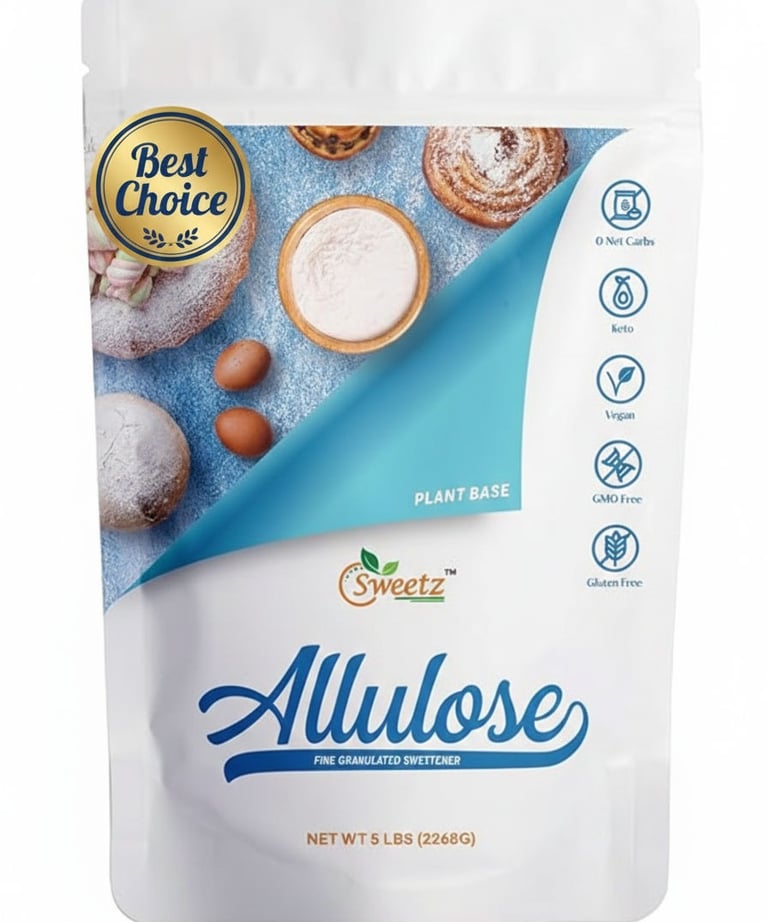
Allulose is the new "it" molecule in longevity circles. It is found naturally in very small quantities in figs, raisins, and wheat. Chemically, it is an epimer of fructose—it has the same chemical formula as fructose ($C_6H_{12}O_6$), but the atoms are arranged differently.
Why Biohackers Love It
The magic of Allulose lies in its "mirror-image" structure. Your tongue recognizes it as sugar (it is about 70% as sweet as table sugar and tastes almost identical), but your body cannot metabolize it. Approximately 70% of the Allulose you consume is absorbed into the blood but then excreted unchanged in your urine.
The "Anti-Sugar" Effect
Perhaps the most stunning find for the Evergold community is that Allulose doesn't just not spike sugar; it may actively lower it. Research suggests that Allulose inhibits the enzymes that break down starch and sugar in the gut, effectively "blunting" the glucose spike of other foods you eat with it.
2. Allulose: The "Rare Sugar" Revolution
Allulose is the new "it" molecule in longevity circles. It is found naturally in very small quantities in figs, raisins, and wheat. Chemically, it is an epimer of fructose—it has the same chemical formula as fructose ($C_6H_{12}O_6$), but the atoms are arranged differently.
Why Biohackers Love It
The magic of Allulose lies in its "mirror-image" structure. Your tongue recognizes it as sugar (it is about 70% as sweet as table sugar and tastes almost identical), but your body cannot metabolize it. Approximately 70% of the Allulose you consume is absorbed into the blood but then excreted unchanged in your urine.
The "Anti-Sugar" Effect
Perhaps the most stunning find for the Evergold community is that Allulose doesn't just not spike sugar; it may actively lower it. Research suggests that Allulose inhibits the enzymes that break down starch and sugar in the gut, effectively "blunting" the glucose spike of other foods you eat with it.
3. The Comparison: Head-to-Head
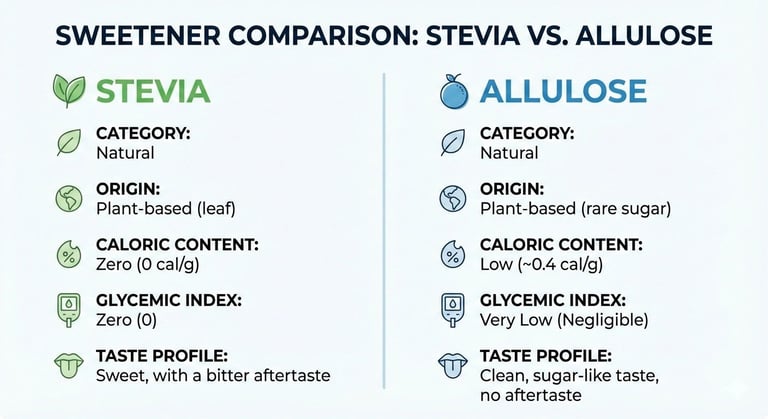
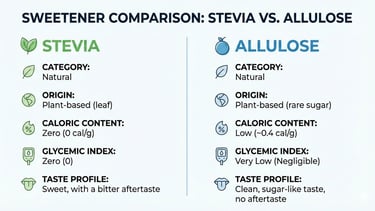
4. The "Evergold" Nuance: Gut Health & GLP-1
As we discussed in our article on the microbiome, gut health after retirement is fragile.
Stevia is largely "inert" in the gut. It doesn't feed the bad bacteria, but it doesn't do much for the good ones either.
Allulose behaves more like a prebiotic. It travels to the lower intestine where it can support the growth of beneficial bacteria. Even more exciting? Allulose has been shown to stimulate the release of GLP-1 (Glucagon-like peptide-1)—the same hormone targeted by blockbuster longevity drugs like Ozempic—which helps regulate appetite and blood sugar naturally.
Warning for Seniors: Because Allulose is a "rare sugar," your gut needs time to adjust. If you jump from zero to 50 grams in a day, you will experience significant bloating and "gastric urgency." Start with 5–10 grams and work your way up.
5. The "Golden Ratio" Recipe
If you want the best of both worlds, the "Evergold" biohack is to mix them.
1. Allulose provides the bulk, the mouthfeel, and the "anti-spike" benefits.
2. Stevia (in very small amounts) provides the extra "punch" of sweetness to bring the Allulose up to a 1:1 sugar replacement level.
Evergold Morning Coffee Biohack:
1 tsp Allulose (to blunt any caffeine-induced cortisol/glucose spike)
2 drops Liquid Stevia
1 pinch Sea Salt (to kill any remaining Stevia bitterness)
Conclusion: Which Should You Choose?
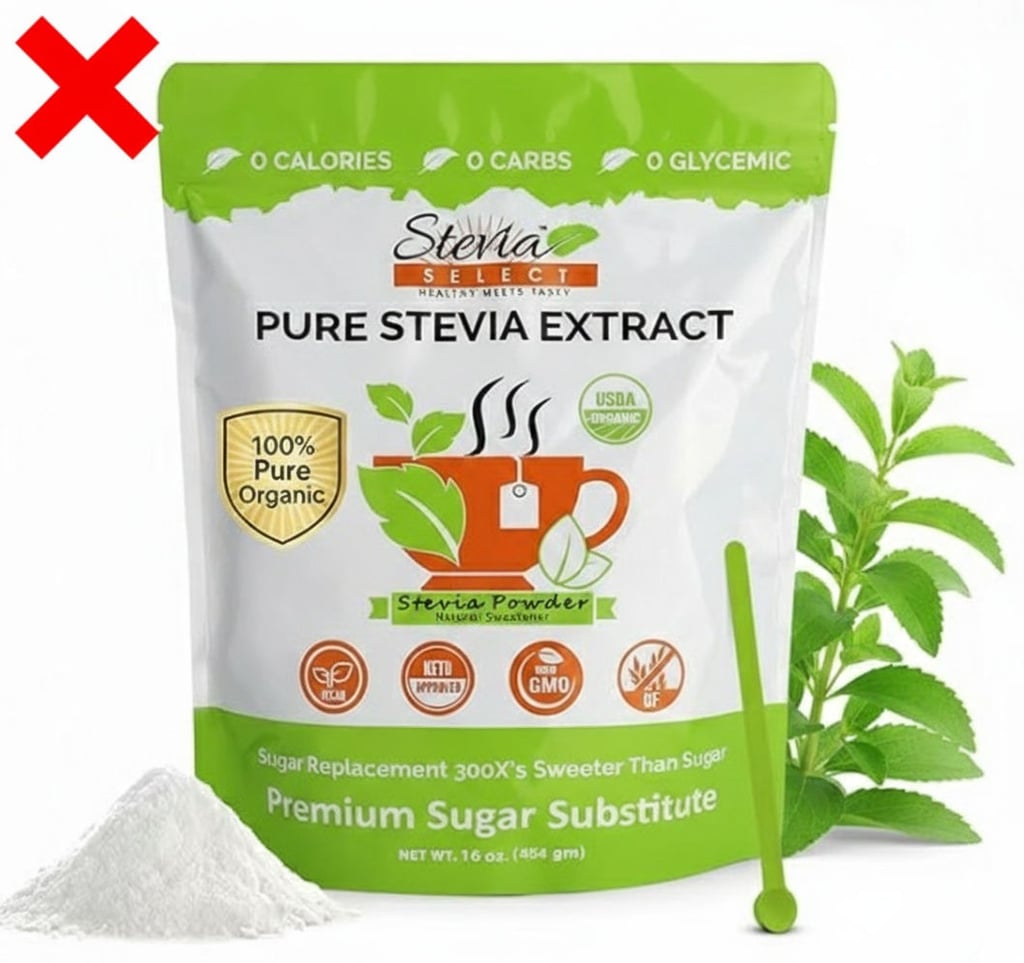
If you are strictly watching your cardiovascular markers and want a zero-calorie "utility" sweetener, Pure Stevia (specifically Reb-M) is your best friend.
However, if you are a "Longevity Foodie" who wants to bake healthy treats, improve your insulin sensitivity, and enjoy a taste that is indistinguishable from sugar, Allulose is the clear winner of the 2026 longevity era.
By choosing these "smart" sweeteners, you aren't just avoiding a "sugar crash"—you are actively training your metabolism to remain resilient throughout your Marginal Decade. Sweetness, it turns out, can be a tool for health.
Contact
© 2026. All rights reserved.
DISCLAIMER
We love sharing information, but please remember we aren't doctors, lawyers, or financial advisors. Always check in with a professional before you start a new fitness routine, change your diet, or make big financial decisions. Your specific situation deserves expert attention.