
Zinc and the Immune System: Staying Resilient in Flu Season
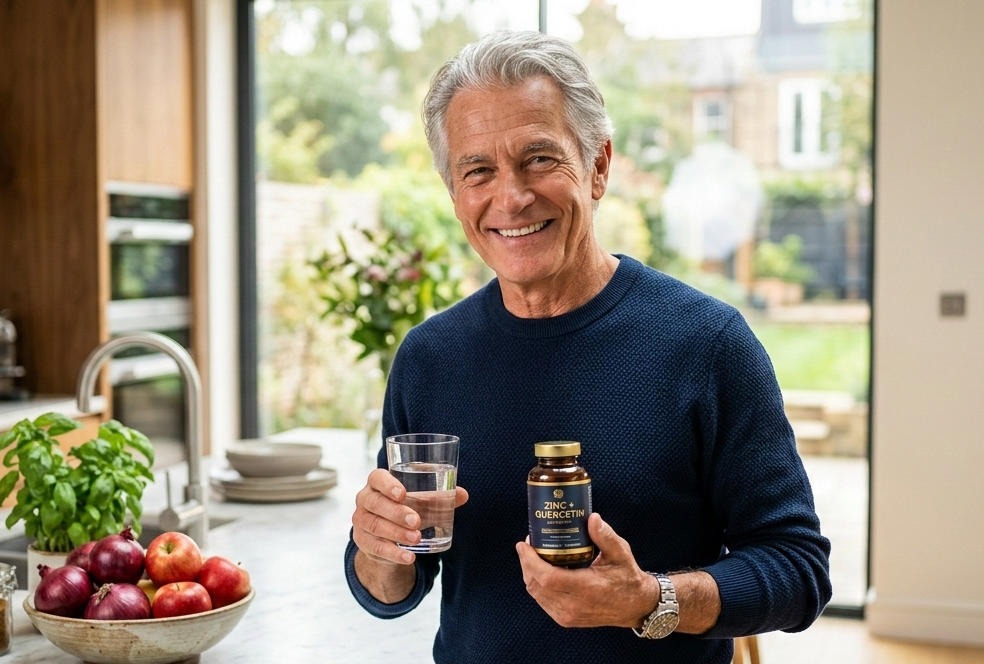
Zinc is an essential trace mineral involved in over 3,000 different proteins in your body. It is the catalyst for DNA synthesis and the fundamental signal for your white blood cells to go to war. Today, we’re looking at why Zinc is your most important ally.
Evergold Longevity
3/13/20265 min read
Transparency Note: We use affiliate links on this page. If you decide to buy something through these links, we may earn a small commission. This helps us keep the site running and provides you with free content. Thank you for the support!
In the Evergold philosophy, we don’t view the immune system as a passive shield that either "works" or "fails." We view it as a sophisticated, high-performance military. It requires elite training, constant surveillance, and—most importantly—reliable supply lines.
As we progress through our 60s and 70s, our immune system undergoes a process called Immunosenescence. The "training academy" for our immune cells (the thymus gland) begins to shrink, and our "first responders" become a bit slower to arrive at the scene of an infection. In the world of Medicine 3.0, our goal is to counteract this decline by providing the one element that acts as the "Master Key" for immune function: Zinc.
Zinc is an essential trace mineral involved in over 3,000 different proteins in your body. It is the catalyst for DNA synthesis and the fundamental signal for your white blood cells to go to war. Today, we’re looking at why Zinc is your most important ally during flu season and how to get it past the "cellular gates" where it can actually do its work.
1. The Cellular Combat: How Zinc Stops a Virus
To understand why Zinc is so effective against the flu and other respiratory viruses, we have to look at the "Viral Hijack." When a virus enters your body, its goal is to break into your cells and use your own machinery to create thousands of copies of itself.
The "Brake" on Replication
Once a virus is inside a cell, it uses an enzyme called RNA-dependent RNA polymerase to replicate. Research has shown that free zinc ions (Zn2+) can actually bind to this enzyme and "jam" it.
Think of the virus as a rogue printing press trying to churn out counterfeit manifestos. Zinc is like throwing a handful of sand into the gears. If the virus can't replicate, the "army" stays small, giving your immune system the time it needs to identify and eliminate the threat before you feel "sick."
The "T-Cell" Commander
Zinc is also responsible for the maturation of T-lymphocytes (T-cells). These are the "Special Forces" of your immune system. They are trained to identify specifically which cells have been infected and destroy them with surgical precision. Without adequate zinc, your T-cells remain "in barracks," leaving your body to rely on less precise, more inflammatory defenses.
2. The "Evergold" Deficiency: Why Seniors are at Risk
You can be "well-fed" and still be "zinc-starved."
As we age, several factors conspire to lower our zinc levels:
Hypochlorhydria (Low Stomach Acid): Many people over 60 produce less stomach acid or take PPIs (Proton Pump Inhibitors) for reflux. Zinc requires a highly acidic environment to be "unlocked" from the food you eat.
Phytic Acid: If your diet is high in whole grains and legumes without proper soaking, the phytates in those foods bind to zinc and carry it out of your body before you can absorb it.
The "Thymus" Factor: Because our zinc requirements increase as our natural immune hardware (the thymus) wanes, the "standard" 11mg recommendation is often insufficient for maintaining resilience.
3. The "Ionophore" Secret: Getting Zinc Inside the Gates
This is the most critical piece of the Evergold Immune Protocol. Having zinc in your blood is not enough; the "sand" has to get inside the "printing press" (the cell) to stop the virus.
The problem? Zinc is a charged ion (Zn2+), and cell membranes are made of fats (lipids). Since oil and water don't mix, zinc cannot easily cross into the cell on its own. It needs a "Trojan Horse" or a "shuttle."
In biochemistry, we call these shuttles Ionophores.
The Quercetin Connection
Quercetin is a plant pigment (flavonoid) found in red onions and apples. It acts as a powerful zinc ionophore. It "wraps" around the zinc ion, making it fat-soluble so it can slip through the cell membrane.
The Evergold Hack: Taking Zinc alone is like having a key but no one to turn the lock. Pairing your Zinc with Quercetin or EGCG (from green tea) ensures the mineral actually reaches the battlefield inside your cells.
4. Choosing Your Zinc: Picolinate vs. The Rest
If you look at the supplement shelf, the options are dizzying. For the Evergold biohacker, the "attachment" (the chelate) matters most.
Zinc Picolinate: This is the "Evergold Favorite." Picolinic acid is a natural chelator produced by the body to help absorb minerals. Studies show it has significantly higher absorption rates than other forms.
Zinc Gluconate/Acetate: Often found in lozenges. These are excellent for "local" defense in the throat but are less effective for raising systemic levels.
Zinc Sulfate: Common in cheap multivitamins. It is notoriously hard on the stomach and can cause nausea if taken without a heavy meal.
5. The "Copper Balance": Avoiding the Seesaw
In the world of minerals, nothing exists in a vacuum. Zinc and Copper exist on a metabolic seesaw. If you take high-dose zinc for an extended period, you will inadvertently drive your copper levels down.
Low copper can lead to anemia and a weakened nervous system—the exact opposite of our "Resilient Senior" goal.
The Evergold Protocol: If you are taking more than 30mg of zinc daily for more than two weeks, you should look for a supplement that includes a small amount of copper (2mg of Copper for every 30mg of Zinc). This maintains the "Evergold Balance" and prevents long-term depletion.
6. The "Flu-Season" Protocol: Maintenance vs. Acute
We don't use the same strategy for "Peace Time" as we do for "War Time."
Maintenance (Daily)
Zinc Picolinate: 15-30mg daily.
Quercetin: 500mg daily.
Timing: Take with your largest meal to avoid the "Zinc Nausea."
Acute (When you feel a "Tickle")
Zinc Lozenges (Acetate or Gluconate): 15mg every 2–3 hours for the first 48 hours. The goal here is to coat the throat tissues where viruses first land.
Elderberry: Pairs beautifully with zinc to prevent viral attachment.
7. Dietary Foundations: Beyond the Pill
While supplements are high-potency tools, we always build on a dietary foundation.
Oysters: The undisputed king of zinc. A single oyster provides more than your daily requirement.
Pumpkin Seeds (Pepitas): A fantastic "Evergold Snack" that provides zinc along with the magnesium we discussed in our sleep guide.
Grass-Fed Beef: High in bioavailable zinc that isn't blocked by the phytates found in plant sources.
Conclusion: Building a Resilient Architecture
Staying "well" during flu season isn't about luck. It’s about building a cellular architecture that is hostile to invaders. By optimizing your Zinc levels, ensuring you have the "Ionophores" to deliver it, and maintaining the mineral balance of your system, you aren't just avoiding a cold. You are reinforcing the very foundation of your vitality.
In the Marginal Decade, your immune system is your most valuable asset. Invest in its supply lines, and it will keep you in the game for years to come.
Contact
© 2026. All rights reserved.
DISCLAIMER
We love sharing information, but please remember we aren't doctors, lawyers, or financial advisors. Always check in with a professional before you start a new fitness routine, change your diet, or make big financial decisions. Your specific situation deserves expert attention.