Why Social Isolation is the "Smoking" of the 60+ Generation
In 2023, the U.S. Surgeon General issued a landmark advisory stating that social isolation is as deadly as smoking 15 cigarettes a day. For the Evergold generation, this isn't just a poetic metaphor; it is a physiological reality.
Evergold Longevity
2/10/20264 min read

Transparency Note: We use affiliate links on this page. If you decide to buy something through these links, we may earn a small commission. This helps us keep the site running and provides you with free content. Thank you for the support!
In the world of longevity, we spend a tremendous amount of time discussing the "tangibles." We track our grams of protein, we obsess over our $VO_2$ Max, and we meticulously measure our fasting glucose. We treat our bodies like high-performance machines, fine-tuning the fuel and the engine.
But there is a "silent killer" that often goes unmeasured on our smartwatches and lab reports. It is a biological toxin that is more predictive of an early death than obesity, physical inactivity, or even heavy drinking.
In 2023, the U.S. Surgeon General issued a landmark advisory stating that social isolation is as deadly as smoking 15 cigarettes a day. For the Evergold generation, this isn't just a poetic metaphor; it is a physiological reality. As we enter our 60s and 70s, our social circles naturally contract due to retirement, bereavement, or relocation. If we don't treat "Social Fitness" with the same rigor as our "Physical Fitness," we are leaving the most powerful longevity biohack on the table.
1. The Biology of Loneliness: It’s Not Just a Feeling
To the modern biohacker, loneliness is more than an emotional state—it is a pro-inflammatory stimulus. When the human brain perceives itself as "socially isolated," it enters a primitive survival mode.
The HPA Axis and Cortisol
Our ancestors relied on the tribe for protection. Being alone meant being vulnerable to predators. Consequently, the brain evolved to trigger the Hypothalamic-Pituitary-Adrenal (HPA) axis when social ties are severed.
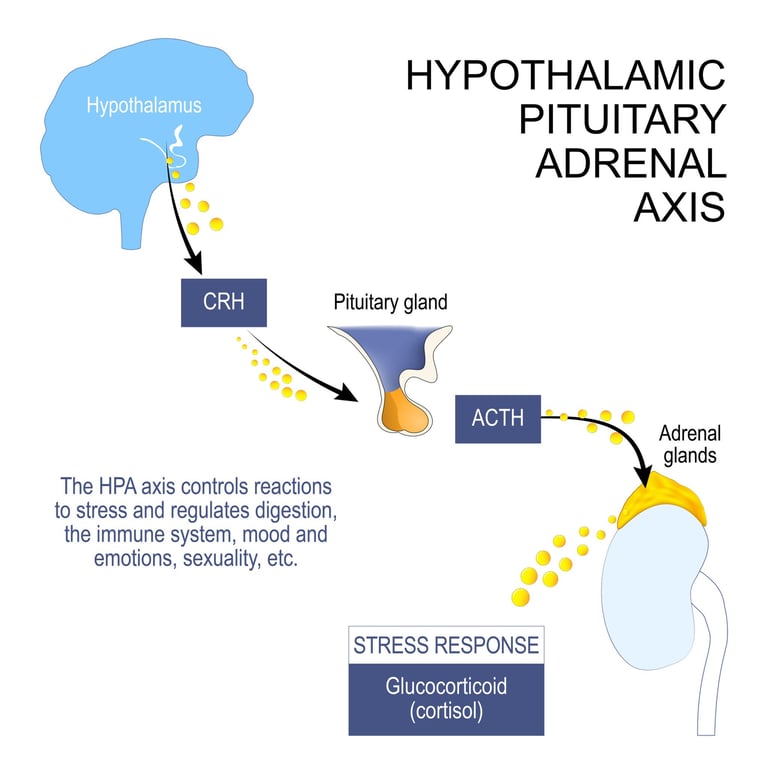
When this axis is chronically activated, your body is flooded with Cortisol. In short bursts, cortisol is helpful. But in the 60+ generation, chronic cortisol elevation leads to:
Insulin Resistance: Making that "Glucose 105" reading even harder to manage.
Muscle Breakdown: Accelerating sarcopenia.
Immune Suppression: Reducing the effectiveness of vaccines and increasing susceptibility to viruses.
The Equation of Mortality Risk
Researchers often use a "Hazard Ratio" ($HR$) to describe the increased risk of death associated with a certain condition. A hazard ratio of $1.0$ represents a baseline risk.
Social Isolation $HR \approx 1.29$: This means isolated individuals have a $29\%$ higher risk of all-cause mortality.
Loneliness $HR \approx 1.26$: A $26\%$ increase.
Living Alone $HR \approx 1.32$: A $32\%$ increase.
When you aggregate these numbers, the cumulative impact on lifespan is staggering.
2. The Cardiovascular Cost: A "Heavy" Heart
How does a lack of coffee dates or phone calls lead to a heart attack? The connection is "Vascular Resistance."
When we are socially isolated, our nervous system remains in a "hyper-vigilant" state (Sympathetic dominance). This causes the blood vessels to constrict and the heart rate to remain slightly elevated. Over years, this leads to:
Hypertension: High blood pressure that is resistant to medication.
Atherosclerosis: The constant "stress state" creates micro-injuries in the arterial walls, allowing plaque to build up more easily.
In essence, social connection acts as a natural beta-blocker. It triggers the release of Oxytocin (the "cuddle hormone"), which has potent vasodilatory effects—it literally helps your blood vessels relax.
3. Cognitive Reserve and the "Social Brain"
Perhaps the most frightening aspect of isolation for the senior generation is its link to Dementia and Alzheimer’s Disease.
The brain is an "expensive" organ to maintain. If a certain part of the brain isn't being used, the body begins to prune those connections. Social interaction is one of the most cognitively demanding tasks we perform. It requires:
Sustained Attention (Listening).
Rapid Processing (Formulating a response).
Emotional Regulation (Empathy and tone).
Memory Retrieval (Recalling shared history).
The Mirror Neuron System
When we interact with others, our "Mirror Neurons" fire, allowing us to map the other person's experiences onto our own brain.
Without this "pinging" of other brains, our cognitive circuits begin to atrophy. Studies show that socially active seniors have a significantly higher Cognitive Reserve, meaning their brains can withstand more physical "plaques and tangles" before showing symptoms of memory loss.
4. The "Evergold" Solution: Biohacking Your Social Fitness
If isolation is the "new smoking," then connection is the "new cardio." But how do we build social fitness in a world that feels increasingly fragmented?
Tier 1: Micro-Interactions (The "Low Dose" Hack)
You don't need a gala dinner to lower your cortisol. Research shows that "weak ties"—the brief interactions with the barista, the librarian, or the neighbor—significantly boost mood and lower inflammation.
The Goal: Aim for three "Micro-Interactions" per day. A simple "Good morning, how is your day?" counts toward your social quota.
Tier 2: The "Multi-Generational" Bridge
One of the pitfalls of aging is only spending time with people your own age. This can lead to "echo chambers of decline" where the primary topics are illness and loss.
The Hack: Volunteer to mentor a younger person, join a hobby group (like a community garden or choir), or use tech like GrandPad to stay in high-frequency contact with younger family members. This provides "Cognitive Novelty," which is vital for brain health.
Tier 3: Digital Integration (The Digital Bridge)
While nothing replaces face-to-face contact, a high-fidelity digital connection is a valid biohack. Video calls (FaceTime/Zoom) are superior to phone calls because they allow for Non-Verbal Synchrony—the ability to see facial expressions and "sync" heart rates through visual connection.
5. Overcoming the "Friction" of Connection
As we age, it’s easy to become "comfortably isolated." We tell ourselves we’re just "introverted" or that "it’s too much effort to go out."
But remember the Evergold Standard: We do the hard things today so we can have an easy life later.
Hearing Health: Many seniors isolate because they can't hear in loud restaurants. Treating hearing loss is a primary biohack for social connection.
Mobility: If you’re afraid of falling, you won't go to the club meeting. This is why our "Centenarian Decathlon" training is so important—it gives you the physical confidence to be social.
Conclusion: Your Community is Your Medicine
You can take all the NMN in the world, you can fast for 16 hours a day, and you can ruy a $5,000 smart ring—but if you are doing it all alone, you are fighting a losing battle against your own biology.
In your 60s and 70s, your social network is as vital to your health as your vascular network. Make the "Gratitude Call." Join the walking group. Smile at the stranger. It isn't just "being nice"; it’s the most sophisticated life-extension protocol we have.
Contact
© 2026. All rights reserved.
DISCLAIMER
We love sharing information, but please remember we aren't doctors, lawyers, or financial advisors. Always check in with a professional before you start a new fitness routine, change your diet, or make big financial decisions. Your specific situation deserves expert attention.