
The Importance of Grip Strength in Retirement: Why Your Hands are a Window into Your Longevity
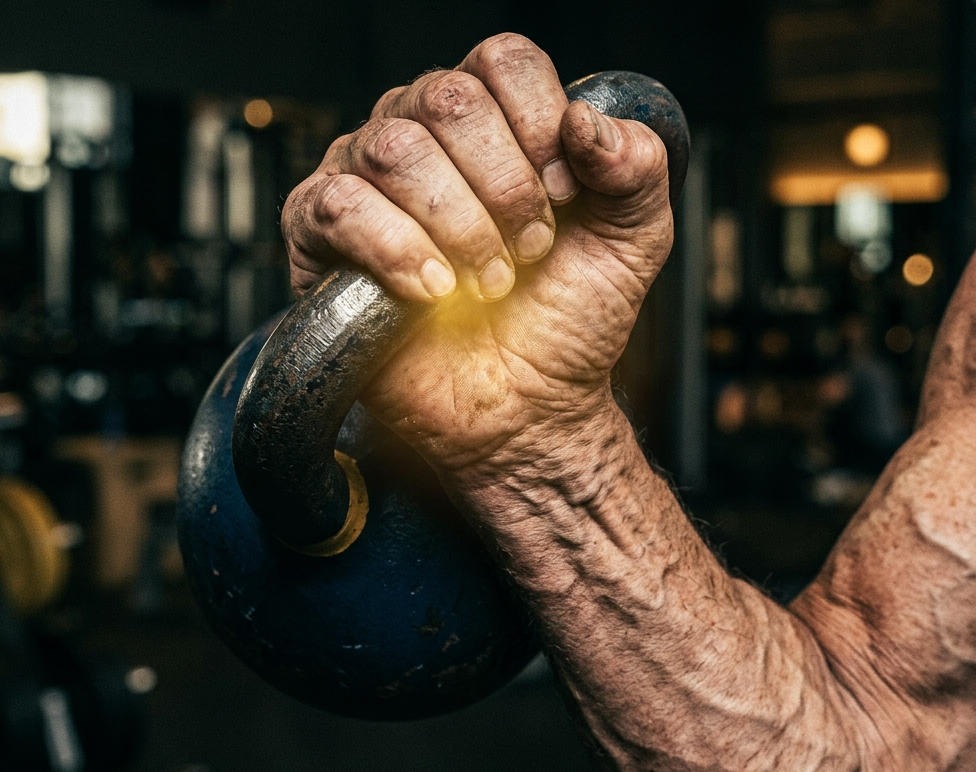
Your hands are the interface between your brain and the physical world. When that interface weakens, it signals a systemic decline in what we call your Biological Capital.
Evergold Longevity
3/26/20265 min read
Transparency Note: We use affiliate links on this page. If you decide to buy something through these links, we may earn a small commission. This helps us keep the site running and provides you with free content. Thank you for the support!
In the traditional medical model (Medicine 2.0), we measure health through a standard battery of tests: blood pressure, cholesterol, and BMI. While these metrics have their place, they often fail to capture the most important factor in a high-quality "Second Act": Functional Capacity.
As we transition into the era of Medicine 3.0, we are looking for more sophisticated "biomarkers" that predict not just how long we will live, but how well we will live. Perhaps the most underrated and easily measured of these biomarkers is Grip Strength. At EvergoldLongevity, we don't view a weak grip as a minor inconvenience in the kitchen; we view it as a clinical warning sign. Your hands are the interface between your brain and the physical world. When that interface weakens, it signals a systemic decline in what we call your Biological Capital.
1. The "Death Grip": What the Science Tells Us
The correlation between grip strength and mortality is so strong that researchers often refer to it as a "better predictor of death than systolic blood pressure." This isn't hyperbole; it is the result of massive, longitudinal studies.
The PURE Study
One of the most significant pieces of evidence comes from the Prospective Urban Rural Epidemiology (PURE) study, which followed nearly 140,000 people across 17 countries for four years. The findings were startling: every 5-kilogram (approx. 11 lb) decrease in grip strength was associated with:
A 17% increased risk of cardiovascular death.
A 7% increased risk of non-cardiovascular death.
A 9% increased risk of stroke.
Why is it so Predictive?
Grip strength is a "proxy" for total body muscle mass and, more importantly, Neural Drive. It isn't just about the muscles in your forearm; it’s about the ability of your Central Nervous System (CNS) to recruit motor units and create tension. A failing grip often mirrors a failing heart, a failing respiratory system, and a failing nervous system.
2. Beyond Sarcopenia: The Crisis of Dynapenia
In the world of aging, we often talk about Sarcopenia (the loss of muscle mass). However, Medicine 3.0 focuses on a more specific threat: Dynapenia. Dynapenia is the loss of muscle strength that is not caused by neurologic or muscular disease. You can have relatively "large" muscles that are metabolically "quiet" and functionally weak. Grip strength is the most accurate way to measure this functional strength.
In retirement, dynapenia is the primary driver of disability. If you cannot generate enough force to catch yourself during a slip or enough power to lift yourself out of a low chair, your independence is at risk. Grip strength serves as the "canary in the coal mine" for this systemic loss of power.
3. The "Centenarian Decathlon" and Daily Agency
At EvergoldLongevity, we train for the Centenarian Decathlon—a list of ten physical tasks you want to be able to perform in the last decade of your life. Nearly half of these tasks are limited by your grip:
Opening a jar without assistance.
Carrying two bags of groceries for 50 yards.
Lifting a 30lb suitcase into an overhead bin.
Pulling yourself up from the floor after a fall.
Steadying yourself on a handrail during a sudden jolt.
When you lose your grip, you lose your Agency. You move from being an active participant in your life to a person who must constantly ask for help. This transition has profound psychological impacts, often leading to "Aging Anxiety" and a loss of identity.
4. The Neurological Connection: Hands and the Brain
The "Homunculus" is a neurological map of the human body located in the brain's cortex. If you look at this map, the area dedicated to the hands is disproportionately massive compared to the legs or torso.
There is a bi-directional relationship between your hands and your brain.
The Bottom-Up Effect: Engaging in high-tension grip activities stimulates the motor cortex and promotes Neuroplasticity.
The Top-Down Effect: Cognitive decline often manifests first as a slowing of fine motor skills and a reduction in grip force.
By training your grip, you are effectively "massaging" your motor cortex, keeping the neural pathways between your brain and your periphery sharp and responsive.
5. Measuring Your Baseline: The Dynamometer
In the Medicine 3.0 framework, we don't guess; we measure. Every Evergold Athlete should own a basic Hydraulic Hand Dynamometer. What are the Targets?
While standards vary, a general "Evergold Standard" for those in their 60s and 70s is to remain in the top 25th percentile for their age group.
For Men (Age 60-69): Aim for >40 kg (88 lbs).
For Women (Age 60-69): Aim for >25 kg (55 lbs).
If you fall below these numbers, it is not a reason to panic—it is a reason to train. Unlike many biomarkers, grip strength is highly "plastic," meaning it can be improved significantly even in your 80s.
6. The Evergold Grip Protocol: Three Pillars of Power
To build a grip that lasts a lifetime, we must move beyond those little foam "squeeze toys." We need to apply Progressive Overload and Time Under Tension.
Pillar I: The Farmer’s Carry (Functional Load)
This is the single best exercise for longevity.
The Move: Pick up two heavy dumbbells or kettlebells. Stand tall, pull your shoulders back, and walk for 30–60 seconds.
The Benefit: It builds grip, core stability, and cardiovascular health simultaneously. It is the literal definition of "carrying your own weight."
Pillar II: The Dead Hang (Decompression & Endurance)
The Move: Find a pull-up bar. Grab it with an overhand grip and simply hang for as long as you can.
The Benefit: This builds "crushing" grip strength while simultaneously decompressing the spine and improving shoulder mobility—two other major issues in retirement.
Pillar III: Finger Extension (The Antagonist)
Most people only train the "closing" of the hand. To prevent carpal tunnel and arthritis pain, you must train the "opening."
The Move: Place a thick rubber band around your fingers and expand them against the resistance.
The Benefit: This balances the musculature of the forearm and protects the integrity of the finger joints.
7. Nutrition for Connective Tissue Health
Grip strength isn't just about muscle; it’s about the tendons and ligaments that transmit that force. As we age, our connective tissue becomes more brittle.
The Protocol: Combine Type I and III Collagen with Vitamin C approximately 30–60 minutes before your grip training. This "loads" the tendons with the necessary amino acids to repair and thicken in response to the stress of training.
Conclusion: Reclaiming Your Power
In retirement, your hands are your greatest tool for independence. They allow you to garden, to drive, to play instruments, and to hold your grandchildren safely.
By prioritizing grip strength as a key vital sign, you are doing more than just strengthening your forearms; you are reinforcing your entire "Biological Capital." You are telling your brain that you are still a capable, powerful inhabitant of the physical world.
Don't let your world shrink because your grip has weakened. Grab hold of your longevity and refuse to let go.
Stay Strong. Stay Flexible. Stay Evergold.
Contact
© 2026. All rights reserved.
DISCLAIMER
We love sharing information, but please remember we aren't doctors, lawyers, or financial advisors. Always check in with a professional before you start a new fitness routine, change your diet, or make big financial decisions. Your specific situation deserves expert attention.