
Biohacking Tinnitus: Neural Recalibration and the Future of Auditory Sovereignty
We view tinnitus not as a problem with the ears, but as a sophisticated maladaptive neuroplasticity event.
Evergold Longevity
4/23/20264 min read
Transparency Note: We use affiliate links on this page. If you decide to buy something through these links, we may earn a small commission. This helps us keep the site running and provides you with free content. Thank you for the support!
For decades, the standard medical response to tinnitus was as frustrating as the condition itself: "Learn to live with it." In the Medicine 2.0 era, tinnitus was treated as a peripheral symptom of hearing loss—a phantom ringing that was more of a psychological nuisance than a clinical priority.
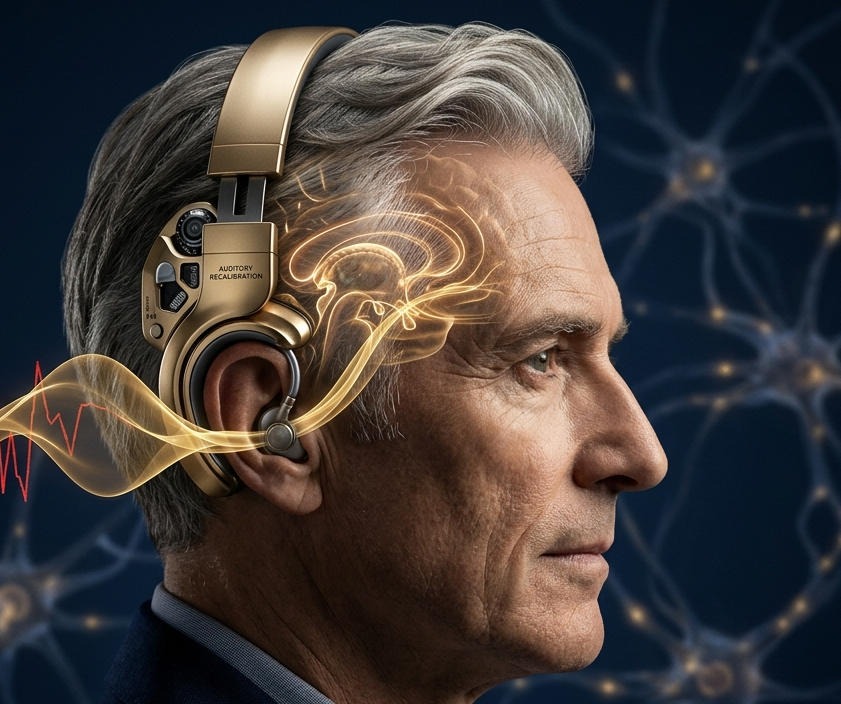
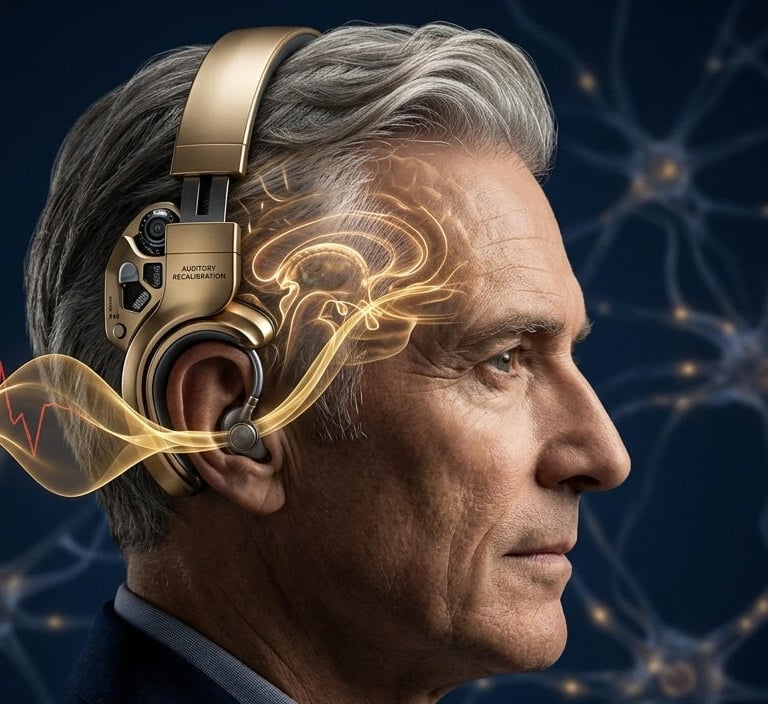
As we move into 2026, the perspective has shifted. At EvergoldLongevity, we view tinnitus not as a problem with the ears, but as a sophisticated maladaptive neuroplasticity event. It is the sound of the brain’s auditory cortex "turning up the gain" in a desperate attempt to hear frequencies that are no longer being delivered by damaged hair cells.
To biohack tinnitus is to seize control of this neural feedback loop. It requires a multi-pronged approach: reducing neuro-inflammation, optimizing the mitochondrial health of the inner ear, and utilizing cutting-edge bimodal neuromodulation to "re-educate" the brain.
1. The Neurobiology of the "Phantom Signal"
Tinnitus is rarely about the ears alone. When the cilia (hair cells) in the cochlea are damaged by noise, toxins, or age, they stop sending signals to the brain. In response, the auditory cortex undergoes a "homeostatic scaling" process. Much like a radio station producing static when it loses a signal, the brain creates its own internal noise to fill the silence.
The Limbic Connection
What transforms a mild ringing into a debilitating condition is the involvement of the Limbic System—the brain’s emotional center. When the brain perceives the phantom sound as a threat, it triggers a "fight or flight" response, releasing cortisol and further sensitizing the auditory pathways. This creates a vicious cycle where stress worsens the tinnitus, and the tinnitus increases stress. In 2026, we break this cycle by treating the brain as much as the ear.
2. Bimodal Neuromodulation: Rewiring the Auditory Cortex
The most significant breakthrough in 2025 and 2026 has been the mainstreaming of Bimodal Neuromodulation. This technology operates on the principle of "Paired Plasticity."
How it Works
Devices like the Lenire (and its 2026 successors) utilize two simultaneous stimuli:
Auditory Stimulation: Specific tones delivered through high-fidelity headphones.
Somatosensory Stimulation: Mild electrical pulses delivered to the tongue or the Vagus nerve.
By pairing the sound with a physical sensation, we "distract" the brain and force it to pay attention to external stimuli rather than internal noise. Over a 12-week protocol, this "re-biases" the auditory neurons, effectively turning down the "gain" on the tinnitus signal. Clinical data from 2026 indicates that over 80% of users experience a significant reduction in tinnitus distress using this "dual-input" strategy.
3. The Molecular Guard: Nutri-Neuropharmacology
The inner ear is one of the most metabolically active tissues in the human body. The hair cells of the cochlea require immense amounts of ATP (energy) to convert sound waves into electrical signals. When these mitochondria fail, the cells die, and the tinnitus signal intensifies.
The 2026 Biostack for Auditory Health:
Magnesium Threonate: Essential for maintaining the "calcium-channel" stability of auditory neurons. It prevents the excitotoxicity that leads to neural "misfiring."
N-Acetyl Cysteine (NAC): A potent precursor to glutathione, the body's master antioxidant. In 2026, NAC is used as a "rescue" molecule after loud noise exposure to prevent permanent cilia damage.
CoQ10 (Ubiquinol) & PQQ: This duo supports mitochondrial biogenesis in the cochlea, ensuring the high-energy demands of hearing are met.
Zinc: Often found in high concentrations in the inner ear, zinc deficiency is statistically linked to increased tinnitus severity in the 60+ demographic.
4. Vagus Nerve Stimulation (VNS) and the "Stress Reset"
The Vagus nerve is the "highway" of the parasympathetic nervous system. By stimulating the Vagus nerve—either through non-invasive transcutaneous devices or specific breathing protocols—biohackers can "mute" the limbic system's reaction to tinnitus.
The 2026 "Neural Lock"
New protocols involve using VNS while listening to Notched Sound Therapy. This therapy takes your favorite music or nature sounds and "notches out" the specific frequency of your tinnitus. When combined with VNS, the brain learns to associate the "silence" in that frequency with a state of deep relaxation, effectively "filtering out" the phantom ringing.
5. Protecting the Cilia: The Structural Defense
In the Medicine 3.0 framework, we don't just treat the sound; we defend the hardware. Hidden Hearing Loss—damage to the synapses between the hair cells and the auditory nerve—is often the silent driver of tinnitus even when a standard audiogram appears "normal."
High-Fidelity Protection
In 2026, the senior uses Active Acoustic Filtering. This isn't just about foam earplugs. Modern filters (like those from Flare or Minuendo) use membrane technology to reduce decibel levels while maintaining the "fidelity" of the sound. This prevents the "social isolation" that often comes with tinnitus while protecting the delicate cilia from further degradation.
6. The 2026 Tinnitus Audit: The Selection Framework
If you are suffering from tinnitus, we recommend the following Medicine 3.0 Audit:
Frequency Matching: Work with an audiologist to identify your specific "Tinnitus Pitch" (e.g., 8,000 Hz).
Mitochondrial Check: Use blood panels to check for Zinc, Magnesium, and Vitamin B12 deficiencies.
The Thermal/Circulatory Factor: Tinnitus is often exacerbated by poor blood flow. Utilizing Hyperbaric Oxygen Therapy (HBOT) or targeted red-light therapy (LLLT) on the mastoid bone can improve microcirculation to the inner ear.
Neural Training: Engage with apps like Oto or Tinnibot, which utilize 2026-grade Cognitive Behavioral Therapy (CBT) to "habituate" the brain to the sound.
7. The Future: Regenerative Therapeutics
As we look toward 2030, the "Holy Grail" of tinnitus treatment—Cochlear Regeneration—is moving into human clinical trials. Companies like Frequency Therapeutics are experimenting with progenitor cell activation to actually regrow the hair cells in the ear. While this is the future, the biohacking strategies of today are about maintaining the "Neural Infrastructure" so that when these regenerative treatments arrive, the brain is ready to receive the signal.
Conclusion: Auditory Sovereignty
Tinnitus is not a life sentence; it is a signal that your auditory system is out of calibration. By applying the principles of neuroplasticity, mitochondrial optimization, and bimodal stimulation, you can reclaim your Auditory Sovereignty.
The goal is not just silence—it is the restoration of clarity. Protect your ears, rewire your brain, and tune back into the sounds that matter.
Stay Sharp. Stay Resilient. Stay Evergold.
Contact
© 2026. All rights reserved.
DISCLAIMER
We love sharing information, but please remember we aren't doctors, lawyers, or financial advisors. Always check in with a professional before you start a new fitness routine, change your diet, or make big financial decisions. Your specific situation deserves expert attention.